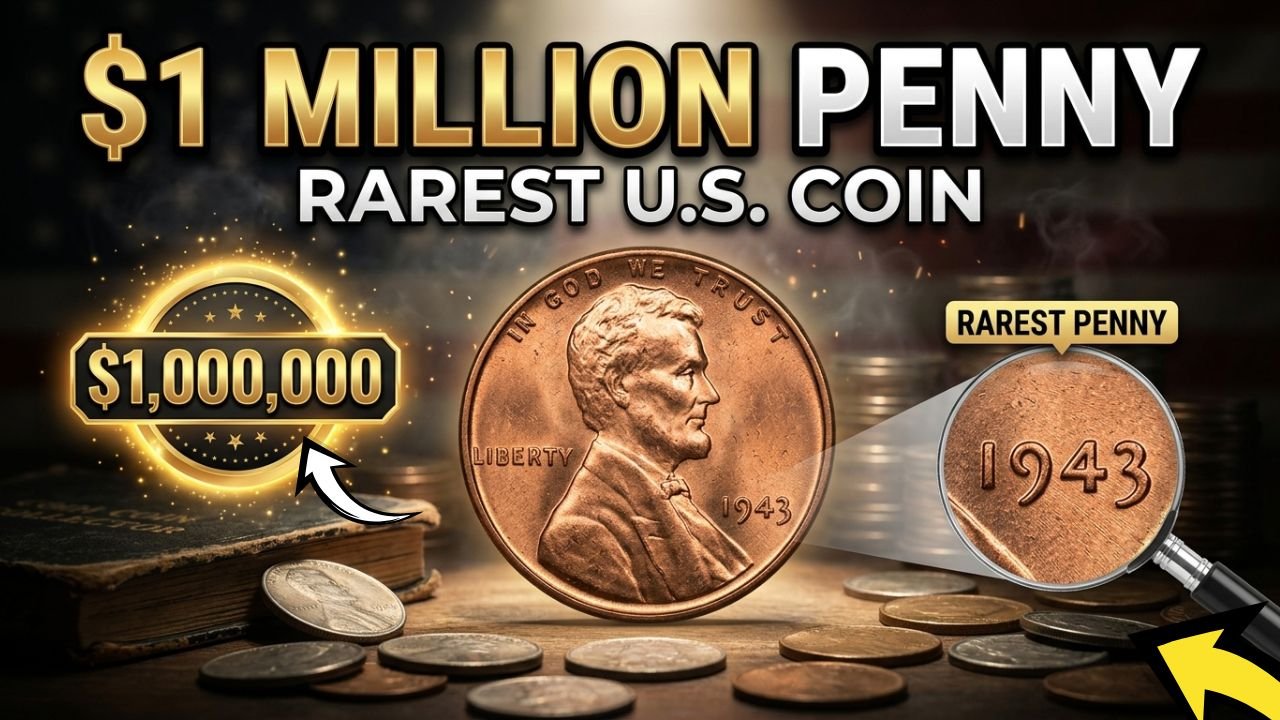
The 1943 Copper Penny is considered one of the rarest and most valuable coins in American numismatic history. At first glance, it may appear to be an ordinary one-cent coin, but certain versions of this penny have sold for over $1 million at auction. This incredible value comes from a rare wartime minting mistake that occurred during World War II.
In 1943, the United States Mint changed the composition of pennies from copper to zinc-coated steel to conserve copper for military equipment. However, a few copper planchets from 1942 were accidentally left in the minting presses and were struck with the 1943 date.
Why the U.S. Mint Changed Pennies in 1943
During World War II, copper became a critical material for manufacturing ammunition, electrical wiring, and other military supplies. To support the war effort, the U.S. government decided to conserve copper by changing the composition of the Lincoln cent.
Instead of using the traditional bronze alloy, the Mint began producing pennies from steel coated with zinc. These coins had a silver-gray appearance, making them very different from the familiar copper-colored pennies Americans were used to.
More than one billion steel pennies were produced in 1943 across the Philadelphia, Denver, and San Francisco mints. However, a small number of copper blanks from the previous year were accidentally mixed into the presses, resulting in the extremely rare copper versions of the 1943 penny.
How the Rare Copper Error Was Created
The famous 1943 Copper Penny was created due to a simple but significant production oversight. When the mint switched to steel planchets in 1943, a few leftover copper blanks from the 1942 production line remained inside the coin presses.

When these copper blanks were struck with the 1943 dies, they produced pennies that looked normal but had the wrong metal composition. Because quality control systems were less advanced at the time, these coins were not immediately detected and entered circulation.
How Much a 1943 Copper Penny Is Worth Today
The market value of a 1943 Copper Penny depends heavily on its condition, mint mark, and authentication. Because these coins are so rare, even worn examples can command enormous prices in the collector market.
In recent years, verified specimens have sold for hundreds of thousands of dollars, with some exceptional coins exceeding $1 million at major auctions. The highest prices are typically achieved by well-preserved coins certified by professional grading services.

Organizations such as PCGS and NGC play a critical role in confirming authenticity. Due to the coin’s high value, many counterfeits and altered coins exist, making professional certification essential.
How to Identify a Genuine 1943 Copper Penny
Identifying a real 1943 Copper Penny requires careful inspection. The easiest first test involves using a magnet. Standard 1943 steel pennies are magnetic, while a genuine copper penny will not stick to a magnet.
Another important step is checking the coin’s color and weight. A copper penny has a reddish-brown appearance and weighs about 3.11 grams, while steel pennies weigh slightly less.

Collectors should also check for mint marks below the date. Authentic copper examples have been discovered from the Philadelphia (no mint mark), Denver (D) and San Francisco (S) mints.
Why Collectors Consider This Coin a Holy Grail
The 1943 Copper Penny holds legendary status in the world of coin collecting. Its origin during World War II, combined with its extreme rarity and extraordinary value, has made it one of the most famous coins ever produced in the United States.
Collectors often describe it as the “holy grail” of Lincoln cents because finding one would be a life-changing discovery. Stories of rare coin finds continue to inspire collectors to examine their old coins more carefully.

Conclusion: A Wartime Mistake Worth a Fortune
The 1943 Copper Penny is a remarkable example of how a small minting mistake can create a coin worth millions. Produced accidentally during a time when copper was reserved for wartime manufacturing, only a tiny number of these coins ever existed.
For many enthusiasts, the possibility that one could still appear in an old coin collection or forgotten jar of pennies keeps the hunt alive for this legendary error coin.