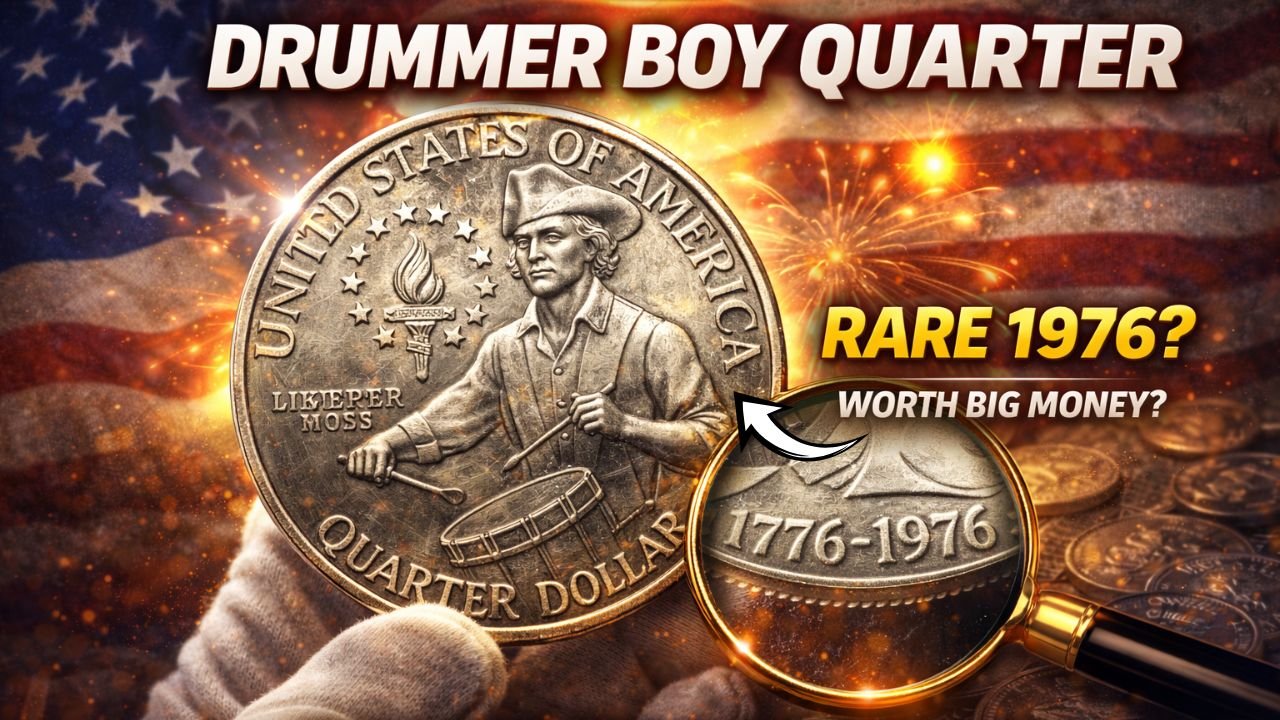
The 1976 Drummer Boy Quarter, officially known as the Bicentennial Quarter, is one of the most recognizable coins in modern American coin history. Issued to celebrate the 200th anniversary of the United States, the coin features a unique reverse design that differs from the traditional eagle used on most Washington quarters.
Although millions of these coins were produced, certain varieties and high-grade examples have become highly desirable among collectors. Because of rare minting variations and silver editions, some Bicentennial quarters can be worth far more than their face value today.
The Special Design of the Bicentennial Quarter
The reverse of the Bicentennial Quarter features a Colonial drummer boy holding a drum and torch, symbolizing the spirit of the American Revolution. The design was created by artist Jack L. Ahr and was selected through a national design competition.

Unlike standard quarters that show a single year, this coin displays the dual date “1776–1976.” This detail highlights the bicentennial celebration and makes the coin instantly recognizable to collectors and history enthusiasts.
Why the Drummer Boy Quarter Became So Popular
The Bicentennial Quarter was produced in extremely large quantities across the Philadelphia, Denver, and San Francisco mints. Because these coins circulated widely throughout the United States, many Americans remember receiving them in everyday change.
Despite the high mintage, collectors remain interested in the coin because it represents a historic national celebration. In addition, certain mint versions and error varieties can be surprisingly valuable.

Valuable Silver Bicentennial Quarters
One of the most collectible versions of the 1976 quarter is the 40% silver proof and uncirculated edition produced by the San Francisco Mint. These coins were not intended for general circulation and were sold in special collector sets.
Because of their silver content and limited production compared to regular quarters, these versions often sell for significantly higher prices than standard copper-nickel coins. High-grade examples in pristine condition can attract strong collector demand.
Rare Error Varieties Collectors Look For
Some Bicentennial quarters are valuable because of minting errors or unusual production variations. Collectors frequently search for coins with doubled dies, off-center strikes, or unusual die cracks.

Another interesting variety includes coins struck on the wrong planchet or with misaligned dies. While these errors are rare, they can significantly increase the coin’s value when authenticated by professional grading services.
1976 Drummer Boy Quarter Value in 2026
Most circulated Bicentennial quarters are still worth close to 25 cents, since so many were produced. However, uncirculated coins with strong details and original mint luster can be worth several dollars.
Silver versions and high-grade specimens certified by grading services such as PCGS or NGC can sell for tens or even hundreds of dollars, depending on condition and rarity. Rare error examples may be worth even more.

How to Identify Valuable Bicentennial Quarters
Collectors should first check the coin’s mint mark, which appears near Washington’s ponytail on the obverse. Coins without a mint mark were produced in Philadelphia, while “D” and “S” indicate Denver and San Francisco.
Examining the coin under magnification can help reveal doubling, unusual strike characteristics, or other minting anomalies. Identifying silver versions is also important, as these coins have different metal composition and collector value.
Conclusion
The 1976 Drummer Boy Quarter remains one of the most memorable coins ever issued by the United States Mint. Its patriotic design and connection to America’s bicentennial celebration make it an important part of modern coin collecting.

While many examples remain common, certain varieties, silver issues, and mint errors can be worth far more than their face value. For collectors and enthusiasts, checking old quarters could still reveal a hidden treasure.