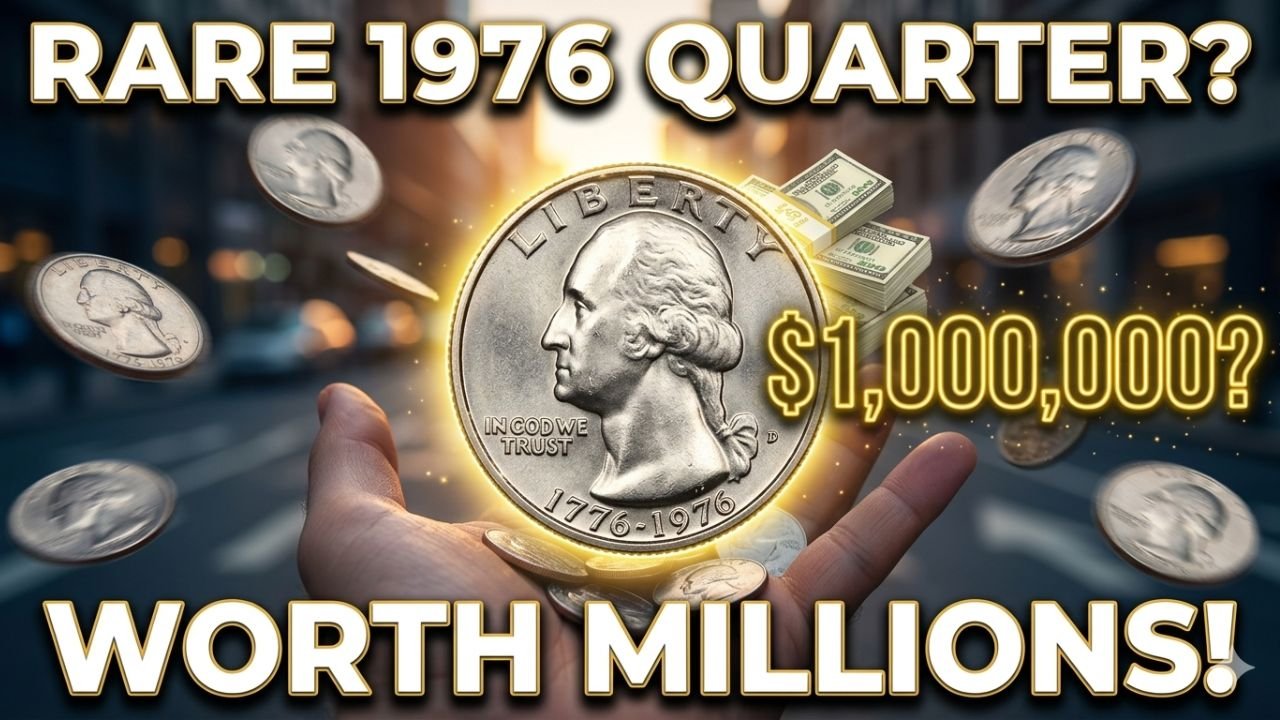
The Bicentennial Quarter was introduced in the United States to celebrate the 200th anniversary of American independence. Instead of the standard date, the coin features the dual date “1776–1976” and a special reverse design showing a colonial drummer, making it one of the most recognizable U.S. coins ever produced.
These quarters were minted in huge numbers by the U.S. Mint in Philadelphia, Denver, and San Francisco. Because more than 1.6 billion coins were produced, most Bicentennial quarters still circulating today are worth only their face value of 25 cents. However, certain rare varieties and minting errors have become extremely valuable to collectors.
How Much a Bicentennial Quarter Is Worth in 2026
In general, the value of a 1976 Bicentennial Quarter depends on three key factors: mint mark, metal composition, and overall condition. A regular circulated coin is typically worth only $0.25, while uncirculated coins in excellent condition can sell for several dollars or more.

Collector versions made with 40% silver, particularly those produced at the San Francisco Mint, are usually more valuable. These special coins can sell anywhere from around $3 to nearly $20,000 depending on their condition and grading. Coins with rare mint errors or unusual characteristics can reach even higher prices at auctions.
Rare Bicentennial Quarters with Extremely High Value
Although most Bicentennial quarters are common, a few rare examples have attracted major attention from collectors. Some coins with unusual minting errors, missing mint marks, or special metal compositions have reportedly sold for extremely high amounts.
For example, a rare no-mint-mark Bicentennial quarter in near-perfect condition was reported to have sold for about $5 million at auction. Similarly, coins struck on the wrong metal planchet or featuring rare mint errors have fetched thousands or even millions of dollars depending on rarity and condition.
Most Valuable 1976 Quarter Errors to Look For
Mint errors are one of the main reasons some Bicentennial quarters are worth far more than their face value. These errors occur during the coin production process and can make a coin extremely rare.
One popular error is the doubled die obverse, where letters appear slightly doubled due to a striking mistake. Another valuable variety is the off-center strike, where the coin’s design is misaligned during minting. Collectors also search for coins struck on the wrong metal planchet, which can significantly increase value.
Silver Bicentennial Quarters and Their Value
Not all Bicentennial quarters are made from the same metal. While most were produced using copper-nickel clad material, the San Francisco Mint released special collector versions containing 40% silver.
These silver coins were mostly included in proof or special mint sets for collectors. Because they contain precious metal and were produced in smaller quantities, their value is usually higher than standard quarters. High-grade silver versions have sold for thousands of dollars in collector markets.
How to Identify a Valuable Bicentennial Quarter
If you want to know whether your 1976 quarter might be valuable, there are several key things to check. The first is the mint mark, which appears on the obverse side near George Washington’s ponytail. Coins may have a “D” for Denver, “S” for San Francisco, or no mark for Philadelphia.
You should also examine the coin carefully for unusual details such as double lettering, off-center designs, or missing metal layers. Additionally, coins that appear shiny and unworn may be worth more because condition plays a major role in determining collector value.
Where You Might Find Rare Bicentennial Quarters
Interestingly, valuable Bicentennial quarters are sometimes discovered in ordinary places. Many collectors search through old coin jars, bank coin rolls, inherited collections, or estate sales hoping to find rare examples.
Because millions of these coins were circulated decades ago, it is still possible for unusual error coins to appear in everyday change. Even though the chances are small, the possibility of discovering a rare coin keeps collectors interested in the series.
Conclusion
The 1976 Bicentennial Quarter remains one of the most fascinating coins in modern U.S. coin collecting. While most examples are common and worth only their face value, certain rare varieties, silver issues, and mint errors can be worth thousands or even millions of dollars.

Collectors continue to search for these special coins because their historical significance and unique design make them highly desirable. If you happen to come across a Bicentennial quarter, it might be worth taking a closer look you could be holding a surprisingly valuable piece of American history.
Last Updated: March 14, 2026 6:37 pm