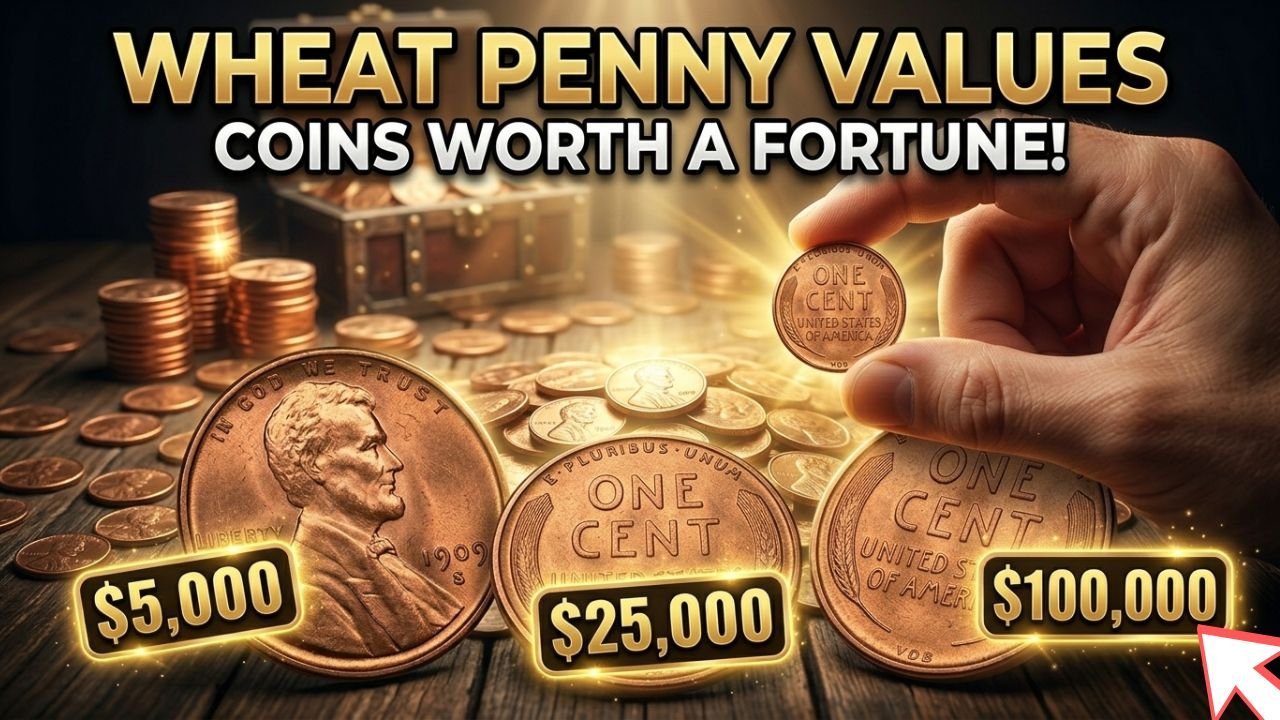
Lincoln Wheat Pennies are among the most popular coins collected in the United States. Produced from 1909 to 1958, these pennies feature the classic wheat ear design on the reverse and are often found in old coin jars and inherited collections.
While many Wheat Pennies are only worth a few cents, certain rare dates and minting errors can be extremely valuable. In some cases, collectors have paid thousands or even hundreds of thousands of dollars for exceptional examples.
The History Behind the Lincoln Wheat Penny
The Lincoln cent was introduced in 1909 to honor the 100th birthday of President Abraham Lincoln. Designed by sculptor Victor David Brenner, it became the first U.S. coin to feature a real historical figure.

The reverse design showed two wheat ears framing the words “ONE CENT,” which gave the coin its popular nickname. This design remained in production until 1958, when the U.S. Mint replaced it with the Lincoln Memorial reverse.
Why Some Wheat Pennies Are Worth So Much
The value of a Wheat Penny depends on several important factors. These include the coin’s mintage numbers, condition, mint mark, and any minting errors that may be present.
Coins with low production numbers or unusual mint mistakes often become highly sought after by collectors. Because demand for rare Lincoln cents remains strong, certain Wheat Pennies can command impressive prices in today’s market.
Rare Wheat Penny Dates Collectors Search For
Some Wheat Pennies are valuable simply because very few were produced. These coins are often called key dates within the Lincoln cent series.
Examples include the 1909-S VDB penny, which had a mintage of only 484,000 coins, and the 1914-D penny, another rare issue that collectors eagerly pursue. Finding one of these coins in excellent condition can be worth thousands of dollars.
Valuable Wheat Penny Errors and Mint Mistakes
Minting errors can dramatically increase the value of a Wheat Penny. One of the most famous examples is the 1955 Doubled Die penny, where the lettering appears clearly doubled due to a die alignment mistake.
Another legendary error is the 1943 copper penny, which was accidentally struck when the Mint switched to steel pennies during World War II. These extremely rare coins have sold for hundreds of thousands or even over a million dollars.
How to Identify Valuable Wheat Pennies
Identifying a valuable Wheat Penny starts with checking the date and mint mark. Mint marks such as “D” for Denver or “S” for San Francisco can significantly affect a coin’s rarity and value.
Collectors should also examine coins for unusual features like doubling, off-center strikes, or unusual metal compositions. Using a magnifying glass and consulting coin reference guides can help determine whether a penny might be valuable.

Tips for Checking Your Old Coin Collection
Many valuable Wheat Pennies have been discovered in old jars, piggy banks, and family coin collections. Because these coins circulated widely for decades, it is possible that rare examples still exist outside of professional collections.
Carefully sorting through older pennies and separating Wheat Pennies from modern coins is often the first step for new collectors. If a potentially rare coin is found, having it authenticated by a professional grading service is highly recommended.
Conclusion
Lincoln Wheat Pennies remain one of the most exciting areas of coin collecting. Their long history, classic design, and the possibility of rare discoveries make them attractive to both beginners and experienced collectors.

While many Wheat Pennies are common, certain rare dates and mint errors can be worth significant money. For collectors willing to look closely at their coins, these historic pennies may still hold hidden treasures.
Last Updated: March 14, 2026 6:37 pm