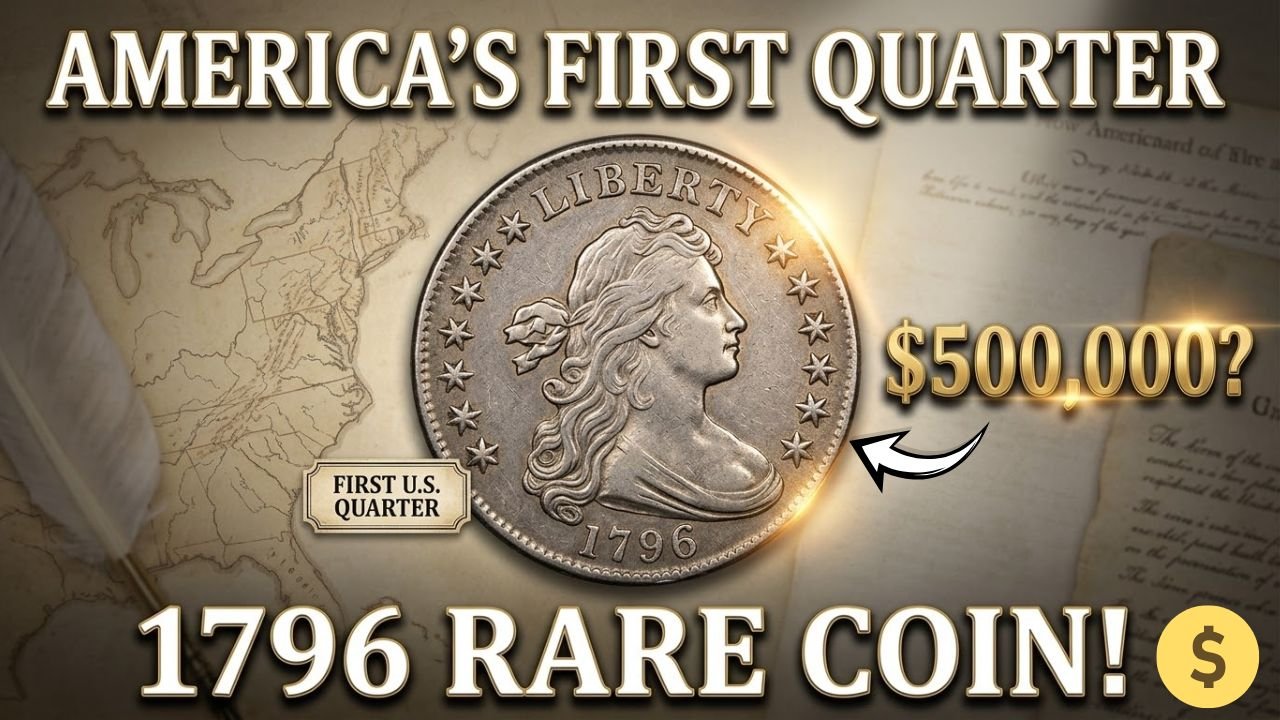
The 1796 Draped Bust Quarter holds a remarkable place in U.S. coin history as the very first quarter dollar ever produced by the United States Mint. Struck during the early years of the nation, this coin represents an important step in establishing America’s official monetary system.
Although its original face value was just 25 cents, surviving examples have become extremely valuable today. Because of its historic importance and very limited production, the 1796 Draped Bust Quarter can be worth hundreds of thousands of dollars, with some high-grade examples approaching $500,000.
The Early Years of the U.S. Mint
The United States Mint began producing coins in the 1790s, shortly after the country established its independence. Early coin production was limited, and only small numbers of coins were struck during the Mint’s first years.

In 1796, the Mint introduced the quarter dollar denomination for the first time. This new coin helped expand the young nation’s currency system and made everyday transactions easier for merchants and citizens.
The Classic Draped Bust Design
The 1796 quarter features the elegant Draped Bust design, which was widely used on several early U.S. silver coins. The obverse shows a portrait of Lady Liberty with flowing hair and draped clothing, symbolizing freedom and the ideals of the new republic.
On the reverse, a small heraldic eagle is surrounded by a wreath and the inscription UNITED STATES OF AMERICA. This simple but historic design reflects the early artistic style used by the United States Mint.

Extremely Limited Mintage
One of the main reasons the 1796 Draped Bust Quarter is so valuable is its extremely small mintage. Historical records indicate that only 6,146 coins were produced, making it one of the rarest regular-issue quarters in American history.
Because many of these coins circulated heavily in the late 18th and early 19th centuries, relatively few survived in collectible condition. This scarcity has made the coin highly desirable among collectors.
Surviving Coins and Collector Interest
Today, numismatic experts believe that fewer than 700 examples of the 1796 quarter still exist in any condition. Many surviving coins show wear from circulation, which makes high-grade examples exceptionally rare.

Collectors value this coin not only for its rarity but also for its historical significance. Owning the first quarter dollar ever struck by the United States Mint represents a major achievement for many numismatists.
Auction Records and Market Value
The value of a 1796 Draped Bust Quarter varies greatly depending on its condition. Coins with heavy wear can still sell for tens of thousands of dollars due to their historical importance.
However, well-preserved specimens in higher grades can reach hundreds of thousands of dollars. Some of the finest known examples have approached $500,000 at major coin auctions.

Key Features That Identify the Coin
Collectors can recognize the 1796 quarter by the Draped Bust portrait of Liberty on the obverse and the small eagle design on the reverse. The date 1796 appears clearly below Liberty’s portrait.
Another distinguishing detail is the arrangement of 15 stars around Liberty, representing the number of states in the Union at the time. These features help confirm the coin’s identity and historical era.
Conclusion
The 1796 Draped Bust Quarter stands as a remarkable symbol of America’s early coinage history. As the first quarter dollar ever struck by the United States Mint, it represents the foundation of the nation’s monetary system.

Although originally valued at just 25 cents, the coin has become one of the most valuable early U.S. quarters. With prices reaching up to $500,000, it remains a prized treasure for collectors and historians alike.